
WordPress bilingual specifications: managing units, precision and versions
Published:
Published by: Hedou Bibi
WordPress bilingual specifications need approved source values, clear units, precision rules and version checks.
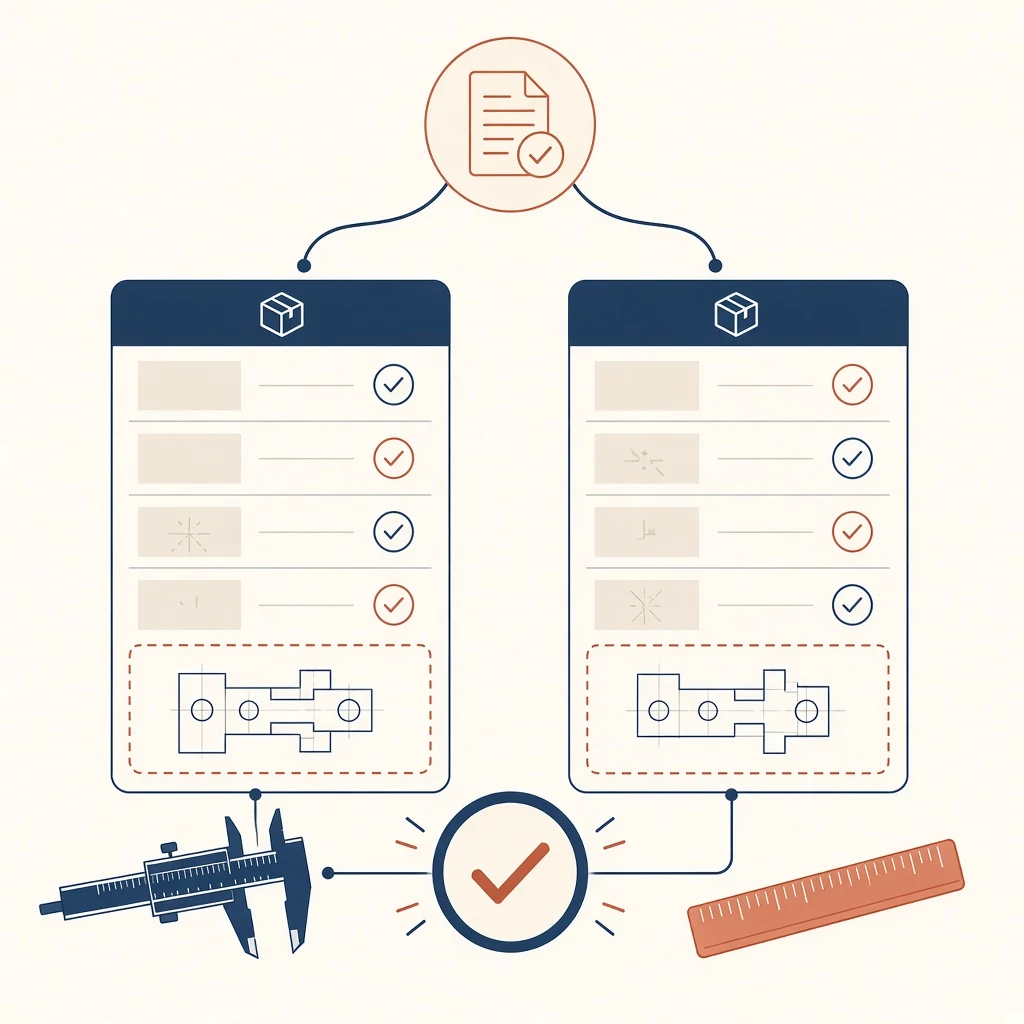
A Chinese page can show net weight while its English counterpart still uses an old packed weight. Both pages may display correctly and pass spelling checks. WordPress bilingual specifications require agreement on meaning and version, not merely matching table layouts. Begin with an approved source and define how each language presents it.
Separate meaning from the source value
Record the model, field definition, original value, unit, operating or measurement conditions, source version and approver. Net and packed weight, or rated and peak values, must not share an ambiguous field. Missing information remains unconfirmed; it does not become zero or unrestricted applicability.
A translator may improve the explanation but should not independently change technical values. If conversion is needed, an appropriate technical owner should approve the conversion basis, display precision and conditions while retaining the original record. Machine translation is not approval of a specification.
Agree on display rules before entering both languages
Choose one unit or a dual-unit presentation according to audience needs and approved material. Do not treat a regional preference as a universal legal requirement. Numbers and symbols inside model identifiers are not quantities to convert. Avoid automatically capitalising unit symbols for visual consistency.
The NIST guide to expressing SI quantities explains notation conventions. Ordinary SI quantities generally separate the number and unit symbol with a space, with exceptions such as plane angles. That writing guidance does not approve a product specification or replace a separate market compliance review.
Track differences in one review sheet
This invented worksheet contains no real product data or conversion results. Each completed row should refer to approved source material.
Scroll horizontally or use the arrow keys to view the full table.
| Check | Record | Problem to catch |
|---|---|---|
| Product identity | Model, version and page URLs | Pairing similar but different models |
| Value and unit | Original value, unit and display rule | Changing the unit without changing the value |
| Precision and range | Approved precision, bounds and tolerance | Creating an appearance of extra accuracy |
| Conditions | Operating context, options and limitations | Turning a conditional value into a guarantee |
| Pages and files | Both language pages and document versions | Leaving an old download after a web update |
Make the editing structure support the agreement
Stable data with the same meaning may use a shared source while explanatory text remains language-specific. Whether this means shared fields or an import process depends on the actual plugins, templates and permissions. Do not overwrite translations or replace numbers in bulk on a live site simply to make records uniform.
Use a product-page information and version checklist to agree what belongs in public content. Then define saving, review and recovery for one model group. A saved backend field does not prove consistency across pages, filters and downloadable files.
Compare the same model before release
Open both actual language pages and compare identity, field meaning, values, units and conditions. Inspect decimal separators, minus signs, ranges and long units. On mobile, every specification column must remain accessible. Open supporting documents and check their versions rather than inspecting only the download button.
When the source changes, record affected pages, languages and files. Confirm the source value before checking its presentation. An unresolved language version remains a pending task; approval of its counterpart cannot substitute for review. Hedou Bibi can use this record to define ownership of data, translation and implementation in a multilingual product catalogue.